• Skip to primary navigation
  • Skip to main content
  • Skip to footer
Alliance icon

A program of the National Alliance for Care at Home

Visit the Alliance
We Honor Veterans logo

We Honor Veterans

Caring Professionals on a Mission to Serve

Log in to the WHV Portal
  • Home
  • About
    • About Overview
    • Reports from We Honor Veterans
  • Caring for Veterans
        • Working for Veterans Overview
        • By Conflict
          • WWII
          • Korea
          • Vietnam
          • Peacekeeping (Cold War)
          • Gulf War
          • Afghanistan and Iraq (OEF & OIF)
        • By Population
          • American Indians and Alaska Natives
          • Former POWs
          • Homeless Veterans
          • Rural Veterans
          • Women Veterans
        • Specific Needs
          • PTSD
          • Military Sexual Trauma
          • Soul Injury and Veterans
          • Substance Use Disorder and Veterans
          • Trauma-Informed Care
        • Veteran Benefits
          • Burial Benefits
          • Healthcare Benefits
          • Survivor Benefits
        • Working with Veterans Organizations
        • Volunteering
        • Honoring Veterans
  • Resources
        • Resources Overview
        • Resource Library
        • Our resource library holds links, pdfs, and toolkits to help you provide excellent veteran-centric care.
        • Grief & Bereavement
        • Hospice-Veteran Partnerships
        • Intake and Admission
        • Partner Networking Calls
        • Psychedelic-Assisted Therapy
        • VA's Whole Health Resources
  • Join the Program
  • Partner Portal
Section Menu

By Population

  • American Indians and Alaska Natives
  • Women Veterans
  • Former POWs
  • Homeless Veterans
  • Rural Veterans

Caring for Veterans » By Population » Rural Veterans

Rural Veterans

Many Veterans who rely on VA for their health care live in remote areas. Providing comprehensive, high-quality health care to these Veterans is a challenge, as Veterans are statistically more likely to live in rural areas than non-Veterans.

As of 2026, approximately 19% of the civilian population lives in Rural areas, whereas that percentage is around 25% for Veterans. According to ORH, 4.7 million Veterans live in rural communities across the United States, and more than 2.8 million rural Veterans rely on VA for their health care.

More than half (56%) of rural Veterans enrolled in VA health care are 65 years old or older. In addition, 8% are women; 15% report being members of racial and ethnic minorities; and nearly 460,000 are Veterans of the recent conflicts in Iraq and Afghanistan. About 18% of rural Veterans have one or more service-related disabilities. 

Additional challenges facing Rural Veteran populations:

  • Low Income – (52% have annual incomes of less than $35,000).
  • Access to modern care options – around 27% do not access the internet at home.
  • Long travel distances to access quality health care.
  • Fewer health care providers and nurses per capita in rural areas.

Office of Rural Health

VA is concerned about the special needs of Veterans who live in rural areas, and this is a top priority in the Veterans Health Administration (VHA). VA’s Office of Rural Health (ORH) is a part of the Veterans Health Administration and their mission is to improve access and quality of care for enrolled rural and highly rural Veterans by developing evidence-based policies and innovative practices to support the unique needs of enrolled Veterans residing in geographically remote areas.

Veterans Rural Health Resource Centers

Veterans Rural Health Resource Centers (VRHRCs) are Office of Rural Health (ORH) field-based satellite offices that serve as hubs of rural health care research, innovation, and dissemination. Congressional mandate 38 USC § 7308 defines the VRHRCs’ mission to:

  • Improve understanding of the challenges faced by Veterans living in rural areas
  • Identify disparities in the availability of health care to Veterans living in rural areas
  • Formulate practices or programs to enhance the delivery of health care to Veterans living in rural areas
  • Develop special practices and products for the benefit of Veterans living in rural areas and for implementation of such practices and products in the Department system-wide

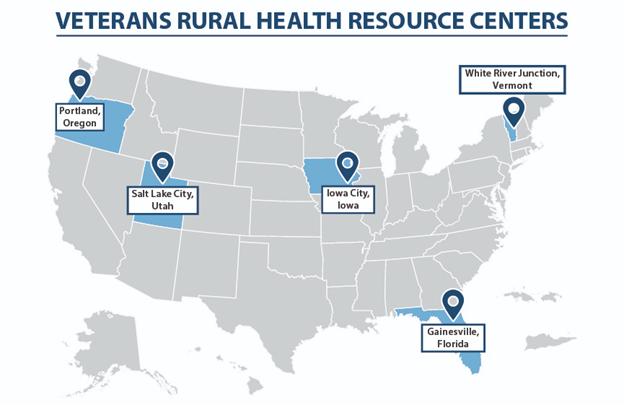
Located at host U.S. Department of Veterans Affairs (VA) medical centers in Portland, Oregon; Salt Lake City, Utah; Iowa City, Iowa; Gainesville, Florida; and White River Junction, Vermont.
  • Back to top
  • Print this page

Footer

We Honor Veterans logo

A program of the National Alliance for Care at Home

About

We Honor Veterans, a program of the National Alliance for Care at Home, provides help and educational resources that teach respectful inquiry, compassionate listening, and grateful acknowledgment as our members work for America’s Veterans. Learn more about We Honor Veterans.

  • Contact We Honor Veterans
  • Donate

Find a Alliance Care Provider

Visit the Alliance to find a care provider in your area.

Start Searching

Logo for the National Alliance for Care at Home© 2026 National Alliance for Care at Home | Privacy

A Decrease font size. A Reset font size. A Increase font size.

This website collects and uses cookies to ensure you have the best user experience. Please click on the “Accept and Close” button to affirm your consent and continue to use our website.